About Us
What is HINA?
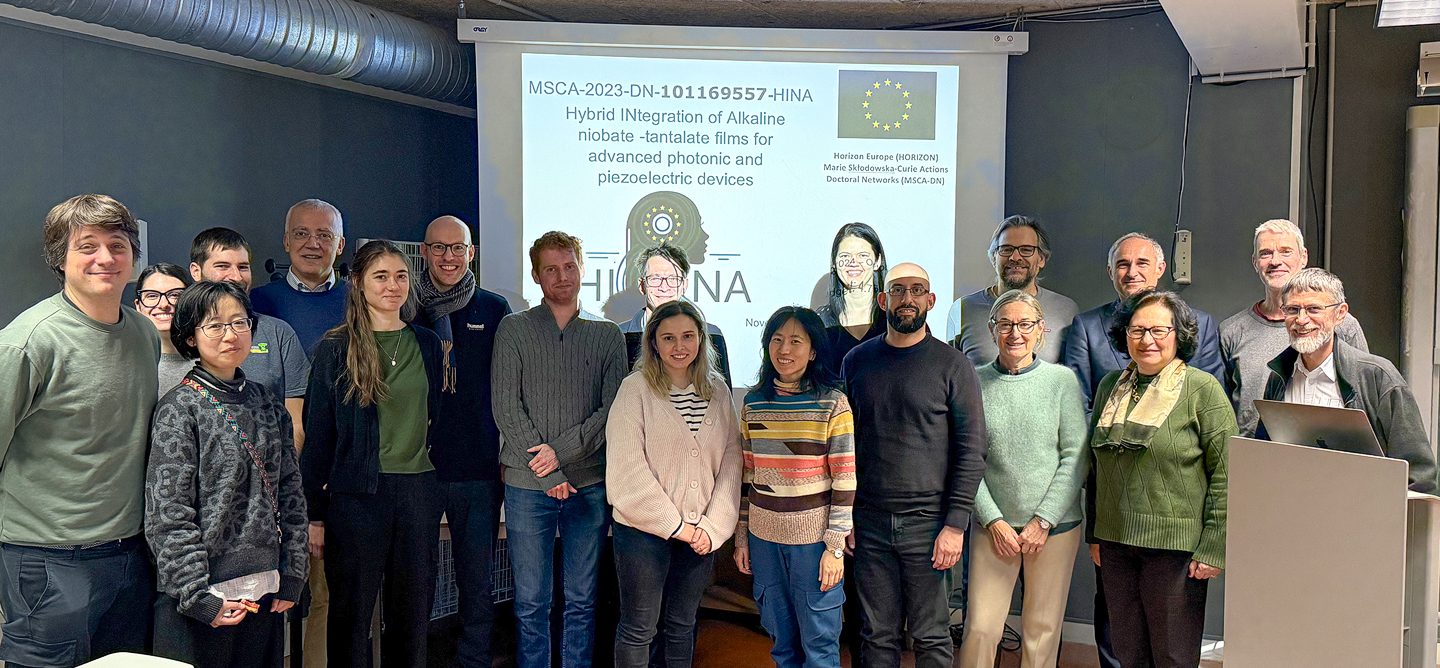
HINA project is a European research and training network launched in November 2023, bringing together 20 academic and industrial partners from all over Europe to train 18 doctoral students and advance high-performance, affordable thin-film technologies for future photonic and acoustic applications.
Our Proposal
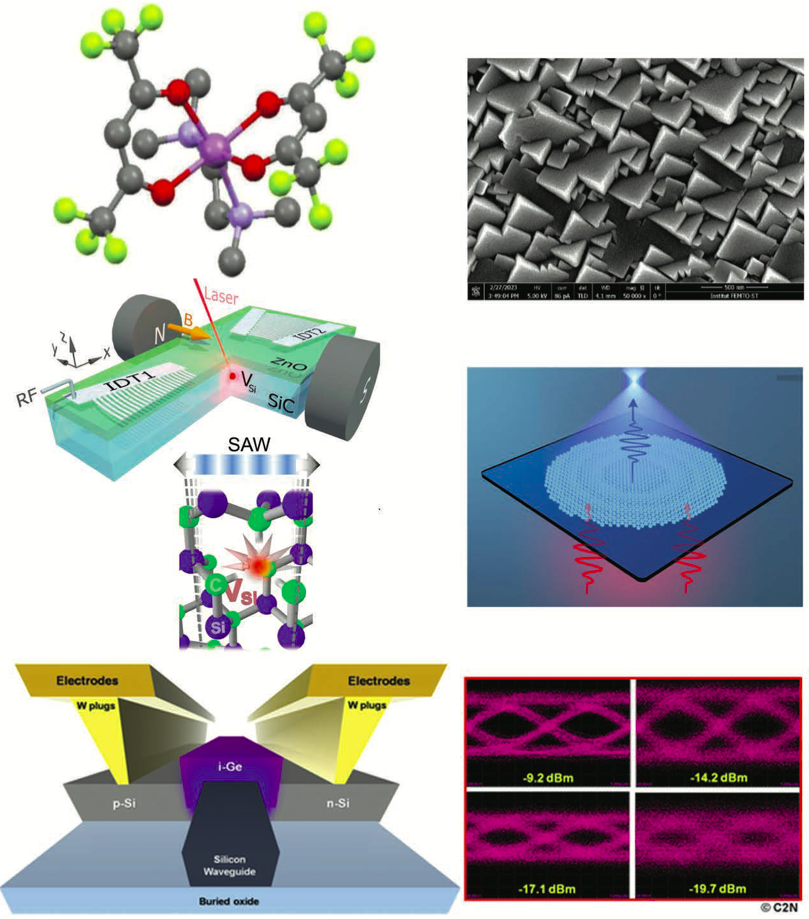
The MSCA Doctoral Network HINA project proposes to consider the hybrid integration of alkaline niobate-tantalate thin films, KNTN, materials with the highest known experimentally measured electro-optic, nonlinear, piezoelectric, elasto-optic coefficients) in photonic and acoustic devices for advanced semiconductor photonics platforms. The final goal of the project is to develop a thin film technology not only offering the state-of-the-art performances but also with reasonable price and viable for real industrial applications in order to stimulate the transfer of newly developed products and technologies by the industry and to help enterprises to withstand global competitive pressures.
The HINA project links world-leading research groups at Academia and Industry to give a combined, integrated approach of synthesis/fabrication, characterization, modeling/theory linked to concepts for materials integration in devices and systems. Such a science-supported total engineering approach will lead towards highly efficient electro-active and nonlinear materials designed towards integrated device needs and viable for industry. Doctoral Candidates (DCs) will focus on this common research objective, applying a multidisciplinary bottom-up approach, which can be summarized by: "engineered molecule- advanced material- designed device - smart system". The HINA project also seeks to intensify the relationship between academic and private sectors, and to train highly skilled young researchers for new materials and device technologies. Both are essential to provide a strong European lead over the rest of the world in this highly competitive technologies.
Our Participants