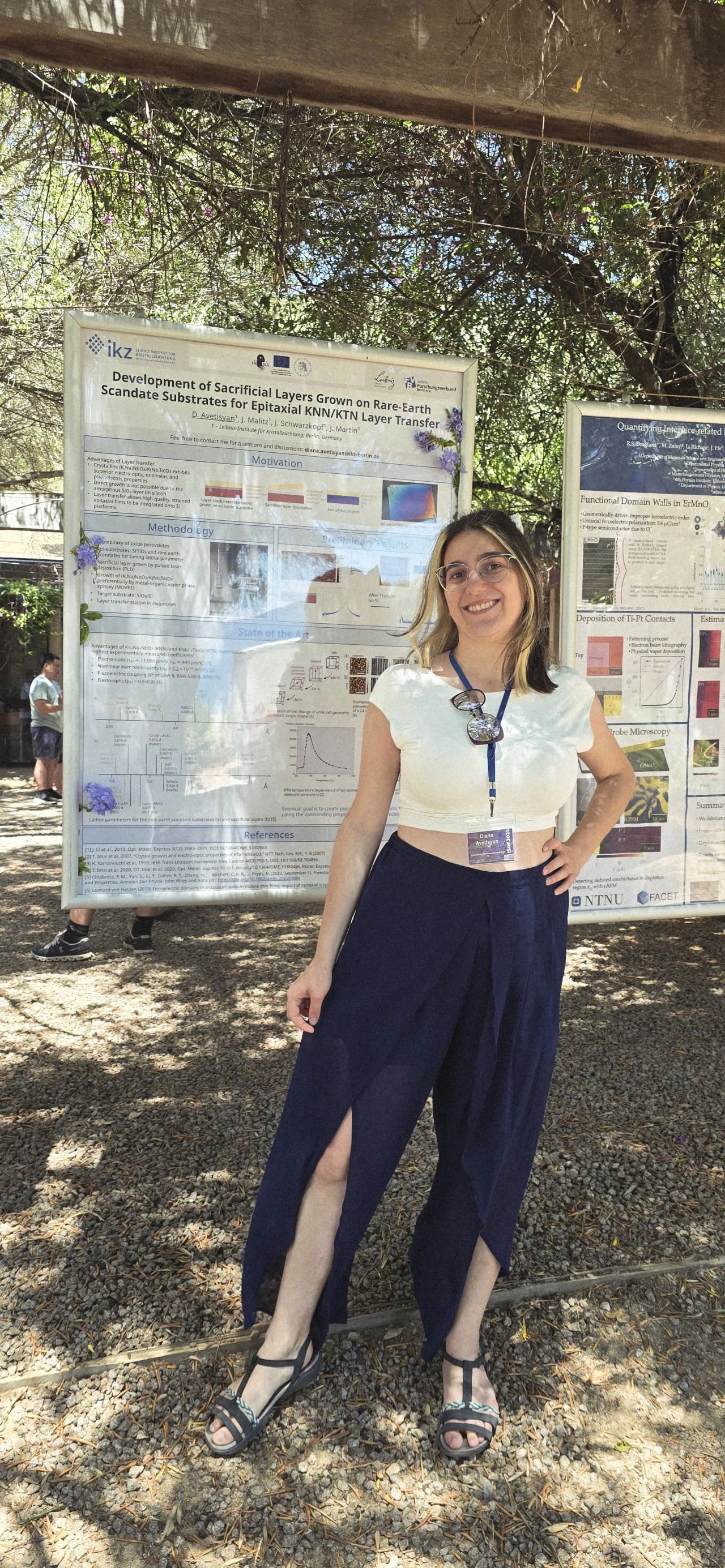
International School of Oxide Electronics 2025 in Cargèse
We are proud of Diana Avetisyan (DC7), who is carrying out her doctoral research at IKZ under the supervision of Dr. Jens Martin, for an excellent start to her PhD journey. Diana delivered her first research presentation within the HINA project at the International School of Oxide Electronics 2025 in Cargèse.
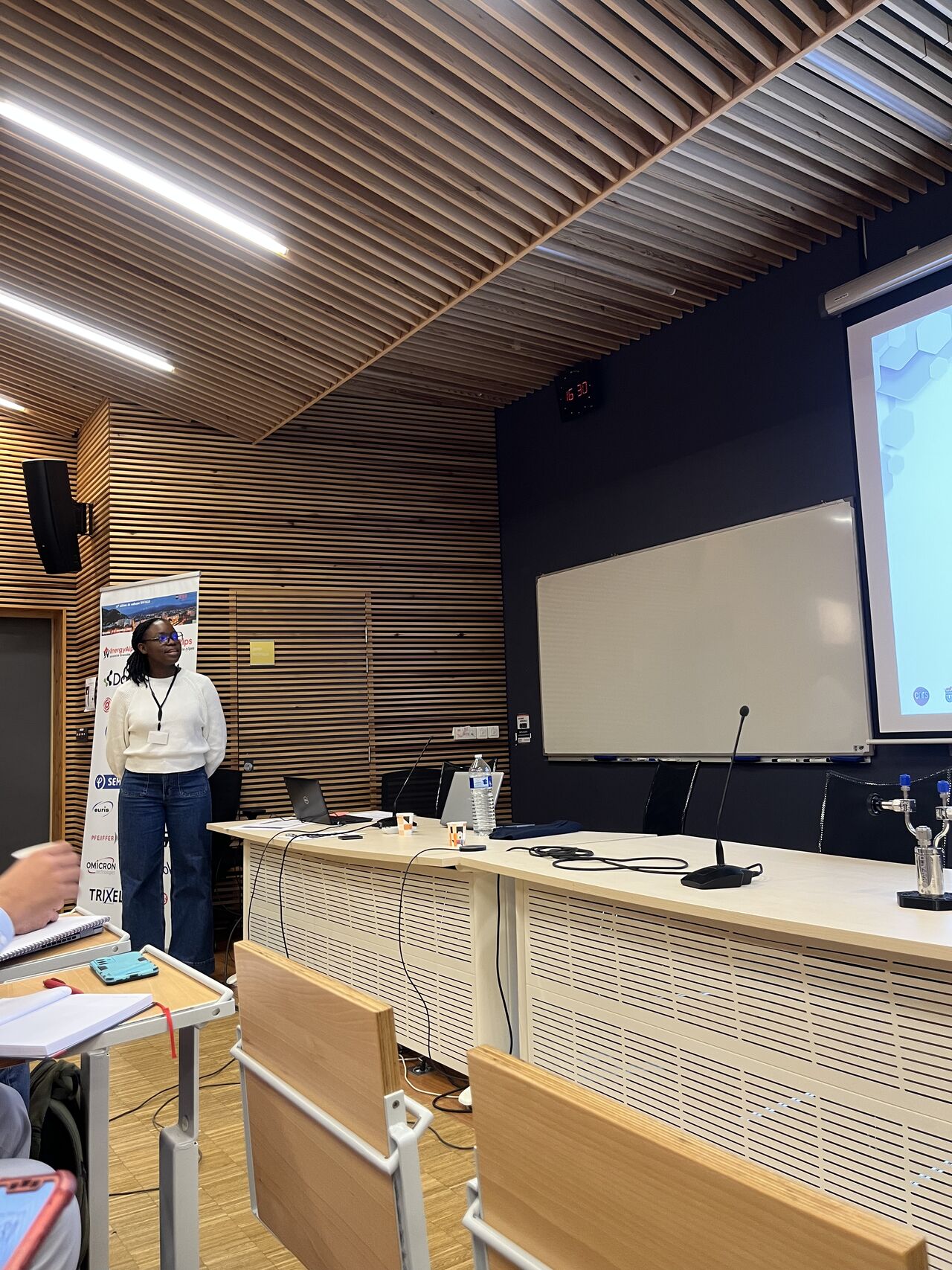
RAFALD 2025 Conference in Grenoble
Laurainne Matchim (DC2) had the opportunity to participate in the RAFALD 2025 Conference (Réseau des Acteurs Français de l’ALD) in Grenoble, where she delivered an oral presentation on her research work. preseHer ntation focused on the synthesis of new heterometallic precursors based on K–Ta and K–Nb, which are promising systems for CVD/ALD applications.
HINA PhD Students present research at EUROCVD & ALD 2024 in Catania, Italy
The HINA project team is proud to highlight the contributions of our doctoral researchers, who presented their first scientific results to the international community and engaged in high-level discussions on CVD metal–organic precursor synthesis and epitaxial growth of thin films. Several HINA DCs delivered poster presentations:
- DC1 – Stijn Engelaar, “Innovative β-diketonate alkali metal precursors for lead-free piezoelectric crystals”
- DC2 – Laurianne Ornella Matchim Fondjo, “Design of new fluorinated aminoalkoxide ligands for MOCVD alkali niobate precursors: synthesis, characterizations, and thermal validation”
- DC4 – Mikhail Mirushchenko, “Growth optimisation of KNbO₃, KTaO₃ and KTaNbO₃ thin films by DLI-CVD”
More details about the doctoral researchers’ work can be found in the conference book of abstracts, available at:
https://lnkd.in/eMjG7edC